Gukurahundi Public Hearings – a travesty of justice

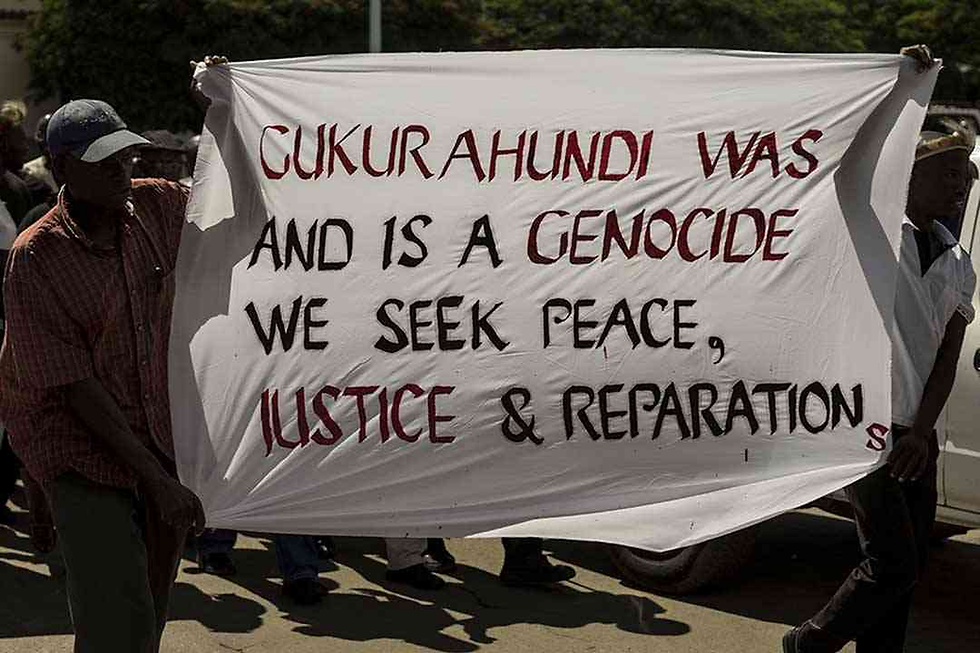
41 years have passed since Gukurahundi genocide which was instigated by the state through the North-Korean trained 5th Brigade in the Matabeleland and Midlands regions of the country shortly after Zimbabwe gained independence from the previous white-minority Rhodesian government. The exact motivations and scale of the Gukurahundi remain debated, but it is generally understood to have been a brutal crackdown by the Mugabe regime on perceived political opponents and dissidents, with the Ndebele people bearing the brunt of the violence. Estimates suggest thousands, possibly up to 20,000, Ndebele civilians were killed in the government-sanctioned military operations. However, what is imperative is that Gukurahundi is and remains a massacre of proportions akin to crimes against humanity.
The Gukurahundi had a devastating impact on the Ndebele community in Zimbabwe. It caused widespread trauma, displacement, and disruption to family and community structures. The legacy of the Gukurahundi has been described as a "black mark" on Zimbabwe's post-independence history, contributing to longstanding ethnic tensions and distrust of the central government, particularly in the affected regions. Previous efforts to fully acknowledge, investigate, and provide justice and reconciliation for the victims and their families have been limited over the decades since the Gukurahundi.
Despite the scale of the atrocities committed by the Zimbabwean government forces against Ndebele civilians, there was a profound lack of meaningful accountability or prosecution of those responsible. The Mugabe regime effectively shielded the perpetrators from facing justice. For many years, the Zimbabwean government denied the extent of the Gukurahundi or tried to downplay it, suppressing information and restricting investigations. This obstructed efforts to uncover the full truth and extent of the crimes. There were very limited efforts to provide reparations, compensation, or support for the victims and their families who suffered immense trauma and loss. The lack of redress compounded the injustice. The lack of justice for the Gukurahundi created an environment of impunity, where the Zimbabwean government continued to violate human rights and commit abuses against its own citizens with little consequence. The Gukurahundi exacerbated longstanding ethnic tensions and mistrust between the Ndebele and Shona ethnic groups, damaging national unity and reconciliation.
In essence, the systematic failure to properly investigate, prosecute, and provide justice for the Gukurahundi massacres represented a profound betrayal of the rule of law and the rights of Zimbabwean citizens. It was a tragic travesty that undermined the promise of a more equitable, democratic Zimbabwe after independence. The lasting impacts of this injustice continue to reverberate in the country.
While significant time has passed since the end of the Gukurahundi massacres in 1987 through the Unity Accord, the legacy of this tragedy remains unresolved. There have been numerous attempts by survivors and citizens to push for the resolution of the Gukurahundi. The latest attempt, by President Mnangagwa to address the legacy of the Gukurahundi massacres through the Chief-led public hearings, might be seen as a noble cause, the process is rife with inconsistencies that ultimately make the process a danger to justice. The inadequacy of the process which comprises the exclusion of the Midlands province which was also affected by the Gukurahundi, the silence of the framework on the notion of justice, the lack of an accompanying legal framework, and the ethical principles guiding the engagements. The manual on the Gukurahundi fails to adequately address the issue of victim and witness protection. Given the sensitivities around the Gukurahundi, the protection of victims and witnesses remains an important pillar in the success of the hearings given that the Manual extends invitations to other stakeholders, including security forces (though it refers to this for security reasons). The lack of concrete principles to this effect may cripple participation and result in the persecution of victims and witnesses or both.
The Framework is also silent on the perceived outcomes of the community engagements apart from the submission of a report to the President of the National Chief’s Council. It would be prudent if the public hearings framework would highlight how communities will achieve socio-economic justice and reparations. The lack of remedies for survivors and their families is central to the authenticity of the process as a bona fide reconciliation process. It remains hanging what will happen to the reports submitted by the chiefs, this should be clearly articulated to gain the confidence of the masses. Furthermore, a lack of an accompanying legal instrument that allows stakeholders and affected communities to be involved in the processes and ensure non-partisan management of the engagements and institutions involved is a huge gap in the process. A legal instrument would also assist in understanding the role of the other independent commissions in the process. Given the immense power given to the President of the National Chiefs Council as the sole decision-maker, it is also vital that these powers be checked and the separation of powers and roles be outlined through a legal framework to ensure accountability.
Whilst these processes continue to impede justice, there is still hope to make the process more transparent to ensure victims and survivors have a semblance of justice. The crucial processes that should be immediately implemented centre around the need to establish an independent, impartial commission of inquiry to thoroughly investigate the Gukurahundi, with full access to government archives and witnesses. Lessons should be drawn from the failures of the National Peace and Reconciliation Commission (NPRC) including the lack of political will and politicisation of the Gukurahundi. The independent commission should provide a comprehensive public accounting of the findings to establish an authoritative historical record, which should be complemented by the identification and prosecution of those most responsible for planning, ordering, and carrying out the Gukurahundi massacres, regardless of their political or military positions.
As the situation obtains, the whole country remains on trial!


Comments