
Human Security and the Citizen's Notion of Development

Introduction and background
The quest to end human suffering is one which is as old as humanity itself. It is this complex inexplicable enigma that ended nomadism and fostered societies, were individual weaknesses are complimented by the strength of other societal members. This would end human suffering through shared efforts in amassing food and security. However, both vertical and horizontal inequalities in the distribution of these resources often led to revolts, insurgency and in some instances anarchy and destruction of societies for example the American Revolution and the French Revolution. Antediluvian attempts to end human suffering like decolonisation, lacked the focus on human needs but rather focused on collective/ state needs. This gave rise to the notion of state sovereignty and state security, in the African context, the OAU formed in 1963 had a concrete stance on non-interference in matters of states and promoted state sovereignty. This flawed mandate of the OAU, the effects of the cold war[1], colonial legacies, poor leadership styles and monarchical tendencies perpetuated both inter-state and intra-state conflicts and fragile states which made the promotion of human centred development mere anachronism.
However, the end of the cold war signalled by the collapse of the berlin wall ushered in fresh ideologies as far as ending the suffering of individu

al citizens. In Africa, a new generation of young leaders succeeded the largely autocratic first-generation leaders, Mahbub ul Haqfirst drew global attention to the concept of human security in the United Nations Development Programme's 1994 Human Development Report, and the rebranding of the OAU to AU under the banner of African Renaissance. This more human centred approach challenged the traditional notion of state security due to the propensity of gross underdevelopment of citizens. Finally, the answers to end human suffering in Africa had been found, or had they?
The Contestation of the Definition of Human Security
The human security approach was introduced in the 1994 global Human Development Report (HDR), which led to a range of literature and initiatives building on the idea and to a series of discussions in the United Nations. Human Security can be loosely defined as people’s freedom from fear, freedom to live in dignity and freedom from want in a broad sense. All proponents of human security agree that the individual should be the focus of security as opposed to state security. However, consensus breaks down over exactly which threats to the individual should be addressed as human security issues. Supporters of the narrow definition of human security argue for a focus on violent threats to individuals and communities. The more comprehensive approach as propounded by the HDR (1994) is more specific, listing seven essential dimensions of human security which are economic, food, health, environmental, personal, community and political security. In 2012 the General Assembly (GA) adopted a common definition of the concept which is “the human security approach broadens the scope of security analysis and policy from territorial security to the security of people.” However, for the purposes of this paper, the 1994 HDR’s definition will be adopted.
Human security versus State Security
Traditional security is about a state's ability to defend itself against external threats. Traditional security[2] describes the philosophy of international security predominance since the Peace of Westphalia in 1648 and the rise of the nation-states. For Thomas Hobbes, the classic state-centred realist, an individual’s insecurity sprang from a life that was “solitary, poor, nasty, brutish and short. The state protected the individual from threats, whether these threats came at the hands of a local thief or from an invading army. For this protection, the citizen essentially relinquished individual rights to the state, as the state was the sole protector. However, the notion of sovereignty and state security has been used by autocratic and para-military regimes, especially in Africa, to cling on to power through perpetrating gross human rights injustices to that effect. The idea that a state maybe free from external threats (inter-state wars) but maybe riddled with war, chaos and anarchy within its borders (intra-state wars) came on the limelight through infamous events such as the Rwanda Genocide (1990-1994), the Idi Amini “reign of brutality” and the blatantly misguided ambitions of Mobuthu in the Congo. All the while, the OAU was silent about these human rights violations. This serves as an illustration of the need for a paradigm shift from state security, to a more human centred approach.
In contrast, to afore discussed issues, human security forms an important part of people’s well-being, as the concept surrounds the development of the individual. The premise is that, developing individuals in a nation breeds a developed nation. An objective of development is “the enlargement of human choices”, therefore, focusing on the provision of human security yields better scores on the Human Development Index. Lack of human security has adverse consequences on economic growth, and therefore development. Some development costs are obvious. For example, in wars, people who join the army or flee and can no longer work productively. Also, destroying infrastructure reduces the productive capacity of the economy. Imbalanced development that involves horizontal inequalities is an important source of conflict. Therefore, vicious cycles of lack of development which leads to conflict, then to lack of development, can readily emerge. Likewise, virtuous cycles are possible, with high levels of security leading to development, which further promotes security in return.
Human security and development.
Definition of development
The dynamic conceptualizing of the notion of development brings serious problems as far as coming with a unified understanding of the concept. To fully conceptualize the idea, efforts should be made to understand its antonym, poverty. Fundamentally, poverty is the inability of having choices and opportunities, a violation of human dignity. It means lack of basic capacity to participate effectively in society. It means not having enough to feed and clothe a family, not having a school or clinic to go to, not having the land on which to grow one’s food or a job to earn one’s living, not having access to credit. It means insecurity, powerlessness and exclusion of individuals, households and communities. It means susceptibility to violence, and it often implies living in marginal or fragile environments, without access to clean water or sanitation (UN, 2011). The World Bank forecasts that 702.1 million people, down from 1.75 billion in 1990. Of these, about 347.1 million people lived in Sub-Saharan Africa (35.2% of the population) and 231.3 million lived in South Asia (13.5% of the population) (World Bank, 2014).
However, Amartya Sen changed the conceptualisation of development. Traditional welfare economics had focused on incomes as the main measure of well-being until his ground-breaking work in the 1980's which showed that that poverty involved a wider range of deprivations in health, education and living standards which were not captured by income alone. His ‘capabilities approach’ led to introduction of the UN Human Development Index, and subsequently the Multidimensional Poverty Index, both of which aim to measure development in this broader sense. Then in 1999 Sen moved the goalposts again with his argument that freedoms constitute not only the means but the ends in development. Sen's view is now widely accepted: development must be judged by its impact on people, not only by changes in their income but more generally in terms of their choices, capabilities and freedoms; and we should be concerned about the distribution of these improvements, not just the simple average for a society. The apparent link between human security and development is therefore apparent.
Theories of development
Literature on economic development is dominated by the following four strands of thought:
v Linear-stages-of-growth model: 1950s and 1960s
This model viewed the process of development as a series of successive stages of economic growth. The premise of development was enshrined in the idea that a mixture of saving, investment, and foreign aid was necessary for economic development. It further emphasized the role of accelerated capital accumulation in economic development. The most notable theories are Rostow’s Stages of Growth and The Harrod-Domar Growth. However, these models failed and have been criticized because of low rate of savings in developing countries that gives rise to savings gap and capital constraint. Scholars Yochi (1963) further argue that savings and investment is a necessary condition for accelerated economic growth but not a sufficient condition.
v Theories and patterns of structural change: 1970s
Structural-change theory focuses on the mechanism by which underdeveloped economies transform their domestic economic structures from traditional to an industrial economy. Representative examples of this strand of thought are The Lewis theory of development and Chenery’s patterns of development. These theories however fell short in addressing the issue of underdevelopment, especially in Africa because the realities of contemporary developing countries are that capitalist profits are invested in labor saving technology, existence of capital flight, little surplus labor in rural areas, growing prevalence of urban surplus labor, and tendency for industrial sector wages to rise in the face of open unemployment. These factors therefore made the theories absolute in the context of most developing countries.
v International-dependence revolution: 1970s
The IDR models reject the exclusive emphasis on GNP growth rate as the principal index of development, instead they place emphasis on international power balances and on fundamental reforms world-wide. IDR models view developing countries as beset by institutional, political, and economic rigidities in both domestic and international setup. The IDR models argue that developing countries are up in a dependence and dominance relationship with rich countries. Three streams of thought: Neoclassical dependence model, False-paradigm model, and Dualistic-development thesis
These theories have been discredited because they do not offer any policy prescription for how poor countries can initiate and sustain economic development. Further, actual experience of developing countries that have pursued policy of autarky/closed economy has been negative.
v Neo-classical, free-market counterrevolution: 1980s and 1990s
Neoclassical counterrevolution in the 1980s called for freer markets, and the dismantling of public ownership, and government regulations. Most of these initiatives were spearheaded by the Bretton woods institutes, emphasizing the ideas brought forward during the Washington Consensus. Four component approaches: Free-market analysis- markets alone are efficient, Public-choice theory- governments can do nothing right, Market- friendly approach- governments have a key role to play in facilitating operations of markets through nonselective interventions, New institutionalism- success or failure of developmental efforts depend upon the nature, existence, and functioning of a country’s fundamental institutions
Human security and the citizens notions of development
The provision of human security to citizens determines how developed a nation is as this shows the state’s capacity and reflects on the governance and strength of policy formulation and implementation. The core 7 human security areas as propounded by the HDR (1994) will be discussed to show how citizens perceive development.
Economic security
Economic security requires an assured basic income for individuals, usually from productive and remunerative work or, as a last resort, from a publicly financed safety net. In this sense, only about a quarter of the world’s people are presently economically secure. While the economic security problem may be more serious in developing countries, concern also arises in developed countries as well. Unemployment problems constitute an important factor underlying political tensions and ethnic violence.
Food security
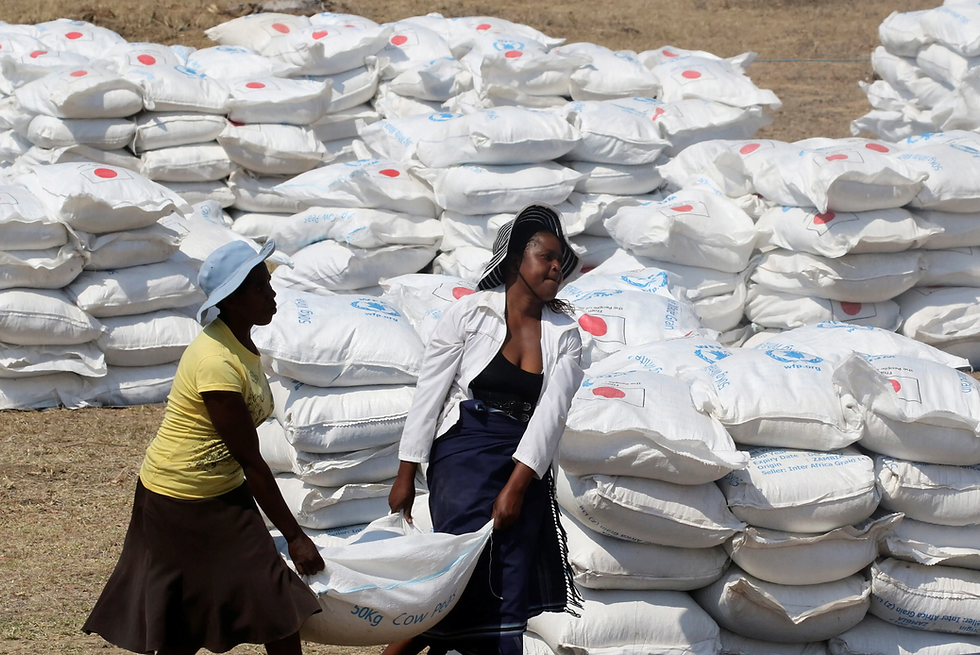
Food security requires that all people at all times have both physical and economic access to basic food. According to the United Nations, the overall availability of food is not a problem, rather the problem often is the poor distribution of food and a lack of purchasing power. In the past, food security problems have been dealt with at both national and global levels. However, their impacts are limited. According to UN, the key is to tackle the problems relating to access to assets, work and assured income (related to economic security).
Health security
Health Security aims to guarantee a minimum protection from diseases and unhealthy lifestyles. In developing countries, the major causes of death traditionally were infectious and parasitic diseases, whereas in industrialized countries, the major killers were diseases of the circulatory system. Today, lifestyle-related chronic diseases are leading killers worldwide, with 80 percent of deaths from chronic diseases occurring in low- and middle-income countries. According to the United Nations, in both developing and industrial countries, threats to health security are usually greater for poor people in rural areas, particularly children. This is due to malnutrition and insufficient access to health services, clean water and other basic necessities.
Environmental security
Environmental security aims to protect people from the short- and long-term ravages of nature, man-made threats in nature, and deterioration of the natural environment. In developing countries, lack of access to clean water resources is one of the greatest environmental threats. In industrial countries, one of the major threats is air pollution. Global warming, caused by the emission of greenhouse gases, is another environmental security issue.
Personal security
Personal security aims to protect people from physical violence, whether from the state or external states, from violent individuals and sub-state actors, from domestic abuse, or from predatory adults. For many people, the greatest source of anxiety is crime, particularly violent crime.
Community security
Community security aims to protect people from the loss of traditional relationships and values and from sectarian and ethnic violence. Traditional communities, particularly minority ethnic groups are often threatened. About half of the world’s states have experienced some inter-ethnic strife. The United Nations declared 1993 the Year of Indigenous People to highlight the continuing vulnerability of the 300 million aboriginal people in 70 countries as they face a widening spiral of violence.
Political security
Political security is concerned with whether people live in a society that honors their basic human rights. According to a survey conducted by Amnesty International, political repression, systematic torture, ill treatment or disappearance was still practiced in 110 countries. Human rights violations are most frequent during periods of political unrest. Along with repressing individuals and groups, governments may try to exercise control over ideas and information.
Since then, human security has been receiving more attention from the key global development institutions, such as the World Bank. Tadjbakhsh, among others, traces the evolution of human security in international organizations, concluding that the concept has been manipulated and transformed considerably since 1994 to fit organizational interests.
Conclusion
Human security as a concept, represents a redefinition of traditional understandings of security and development. It entails the recognition of new threats to security beyond those that are military, including factors such as underdevelopment and human rights violations, the recognition that efforts to provide security have to go beyond dealing with state governments to deal directly with the people concerned; the recognition that intervention can have positive effects, but that it can also have negative effects if not properly conceived and carried out. Human security requires the recognition of interconnections between development, security and human rights; the adoption of multi-dimensional solutions based on an inter-disciplinary approach; making use of academic research in the framing of policy proposals. However, the question that remains is whether human security can be successful in challenging traditional security paradigms, or will it simply remain a marginal concept. In other words can human security serve as an operational basis for action? The assumption in this paper is yes, human security begins by asking the right questions. It proposes a frame work that puts individuals at the center of both analysis and action. It can serve as a means to evaluate threats, foresee crises, analyze the cause of discord and propose solutions entailing a redistribution of responsibilities. In this respect human security is not only an analytic concept, it signifies shared political and moral values. Although human security analysis may not have provided explanations of how insecurity originates, it has called attention to the importance of recognizing the interconnections between a host of factors that in combination produce insecurity. Whatever its weaknesses may be as analytic tool, it provides an effective means for preventing the degradation of people’s well-being and dignity as well as diminishing the consequences of insecurities, be they man-made conflicts or natural disasters. Human security should not be given a narrow definition, but remain flexible enough to develop as our understanding of the roots of worldwide insecurity deepens and our capacity to address these roots is improved. Although human security is frequently accused of being too broad an approach and too ambitious, its essence remains quite humble: to ensure that the worst does not come to pass. Therefore, it is the right thing for all states to adopt.
[1] Proxy wars, redundant militia and vast weapons,
[2] often referred to as national security or state security


Comments