
Part 1. Why nations fail- leadership

Updated: Apr 12, 2019
I was going through the media and it was awash with theories, ideas and views about the economic situation in Zimbabwe. In particular, Zimbabwe went down 2 spaces in the world happiness index. The IMF has also warned that Zimbabwe is set for a major recession this year. Well who cares? These are views from the so called “western capitalists” they say, until the Zimbabwe Consumer Council of Zimbabwe issued a statement that the cost of living had jumped from $781.35 in February to $790.77 in March 2019. Might all these indicators be wrong? How did we get into this situation? Why is our economy failing? The answer is Governance/ leadership. Acemoglu and Robinson contend that nations with the same amount of resources and the same opportunities can have different standards of living for their citizens. This is attributed to the governance and leadership of the country.
Leadership becomes paramount in economic development mainly due to consistency and stability. Foreign investors which are an important facet in the growth of developing economies is anchored on stability and consistency in the Political, Economic, Social, and legal environment of the Country. In the Zimbabwean context, the government has a history of implementing conflicting policies. At the top of these policies are the infamous indigenisation policy, and the frightening monetary policy reviews that make it difficult for anyone to make any economic plan beyond their pronouncements.
Leadership should also provide equality of all persons within their sphere of influence. Equality allows all individuals to undertake economic activities without fear and prejudice. Zimbabwe’s situation on this aspect is quite interesting. There are “sacred cows” that are clandestinely protected by the law. Of interest is the recent case of Chikoore whose video of his assault of an employee went viral on social media, to the amazement of everyone, he only received community service. Without condoning looting, an individual was jailed for stealing an ox drawn plough was sentenced to 5 years in prison. What is the formula, how do you work that out? A plough is more important than life!!?? Sacred cows.
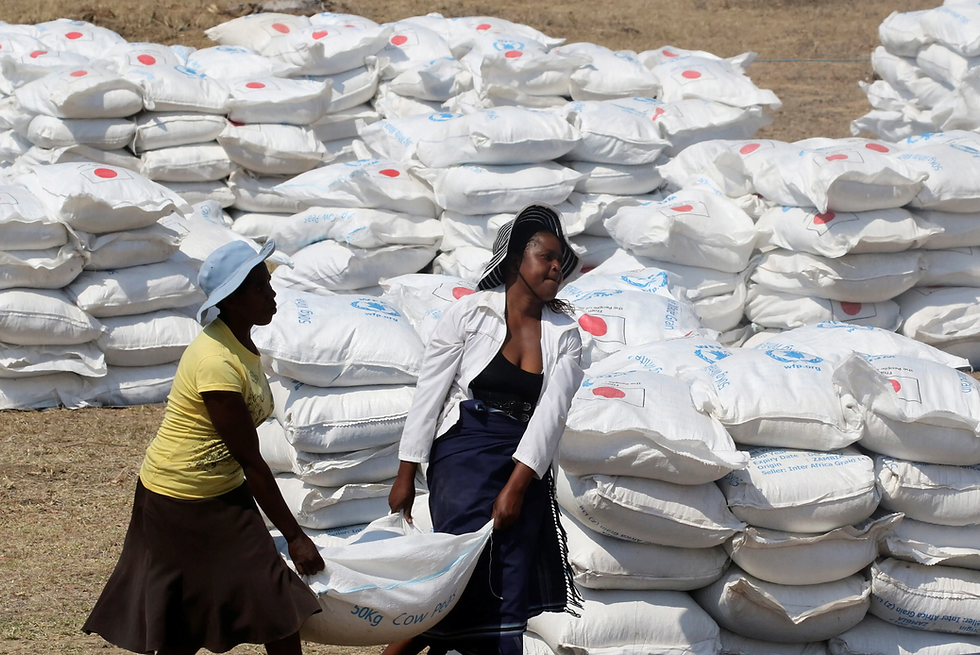
Leadership and governance also entail the ability of a nation to provide basic amenities such as education, health, security, food and water. In essence, the foundation of modern states as articulated by Hobbes in the Leviathan is anchored on a social contract in which the state provides human security for its citizens. Failure to provide these leads to insurgency as witnessed on 1 August 2018 and in January 2019. Insurgency and civil disobedience are enemies of economic development. The lack of basic amenities also results in a weak human capital base. Zimbabweans have been deprived of basic amenities for the better part of the last 2 decades.
Well at this point some are probably thinking that this is another baseless theoretical paper. For those individuals, I will draw 2 illustration of how leadership is important in the economic success of a country. Asia’s phenomenal growth, particularly the growth of the Asian Tigers can be attributed to inspiring leadership. Legitimacy of leadership is important particularly on the social contract. Nationalism is an important fuel for economic democracy that the Asian Tigers and indeed China managed to harness to promote economic development. As long as there are questions on the legitimacy of the leadership in Zimbabwe emanating from the November 17 military takeover to the post July 2018 civil uprisings, economic development will remain a fallacy. From the Asian Tigers, we learn the need for inspiring and legitimate leadership.
Closer to home, Rwanda has become a marvel and a success story of how a divided nation can achieve so much in less than 3 decades. The success of Rwanda teaches Zimbabwe the need for unity of purpose and the importance of political will in the growth of the economy. Zimbabwe needs to acquaint itself with the purpose of leadership and governance in its economic developmental thinking as Rwanda did. Rwanda is particularly interesting in the context of Zimbabwe given the infamous tribal clash in 1994, the same to which can be acquitted to the Zimbabwean tribal clashes in

in the mid 80’s. The story of Rwanda shows how a nation can be united under proper leadership whilst the Zimbabwean question is a true indicator of the negative effects of protracted negative peace and the failure to unite a nation.
Shouting and bragging about the resources in a country is not enough to promote economic development. It is mediocre and sad to publicise the resources that Zimbabwe has given the cost of living for citizens. The right noise to make in the context of Zimbabwe is one which eradicates corruption, promotes legitimate social dialogue and promote consistency in policies and governance.


Comments